What to see snorkeling in Boa Vista? Discover tropical fish, turtles, moray eels, corals, rays, and Cape Verde marine life.
Snorkeling in Boa Vista: what fish and marine animals can you see?
Beneath the turquoise waters of Boa Vista in Cape Verde lies a universe very different from the dunes and long beaches that make the island famous. Colorful fish, coral formations, moray eels, sea turtles, and sometimes even small nurse sharks can be part of the possible encounters during a snorkeling excursion in Boa Vista.
Cape Verde has a unique marine biodiversity, where tropical and subtropical species meet, along with several species endemic to the archipelago.
But what can you actually see with just a mask and snorkel in Boa Vista? Here are the main discoveries that may await you below the surface.
Why is the marine life in Boa Vista so interesting?
Boa Vista does not have the massive continuous coral reefs sometimes associated with tropical destinations. However, the island features several rocky areas and coral-rich sectors that serve as habitats for numerous marine species.
Baía das Gatas, in the northeast of the island, as well as the bay of Sal Rei, are among the well-known sectors for snorkeling.
In Sal Rei, the relatively shallow depths and generally calmer currents in the bay make it easier to observe marine life. At Baía das Gatas, coral formations contribute to a varied fauna, although snorkeling conditions depend heavily on the tide.
It is precisely this diversity of small habitats that makes every entry into the water unique.
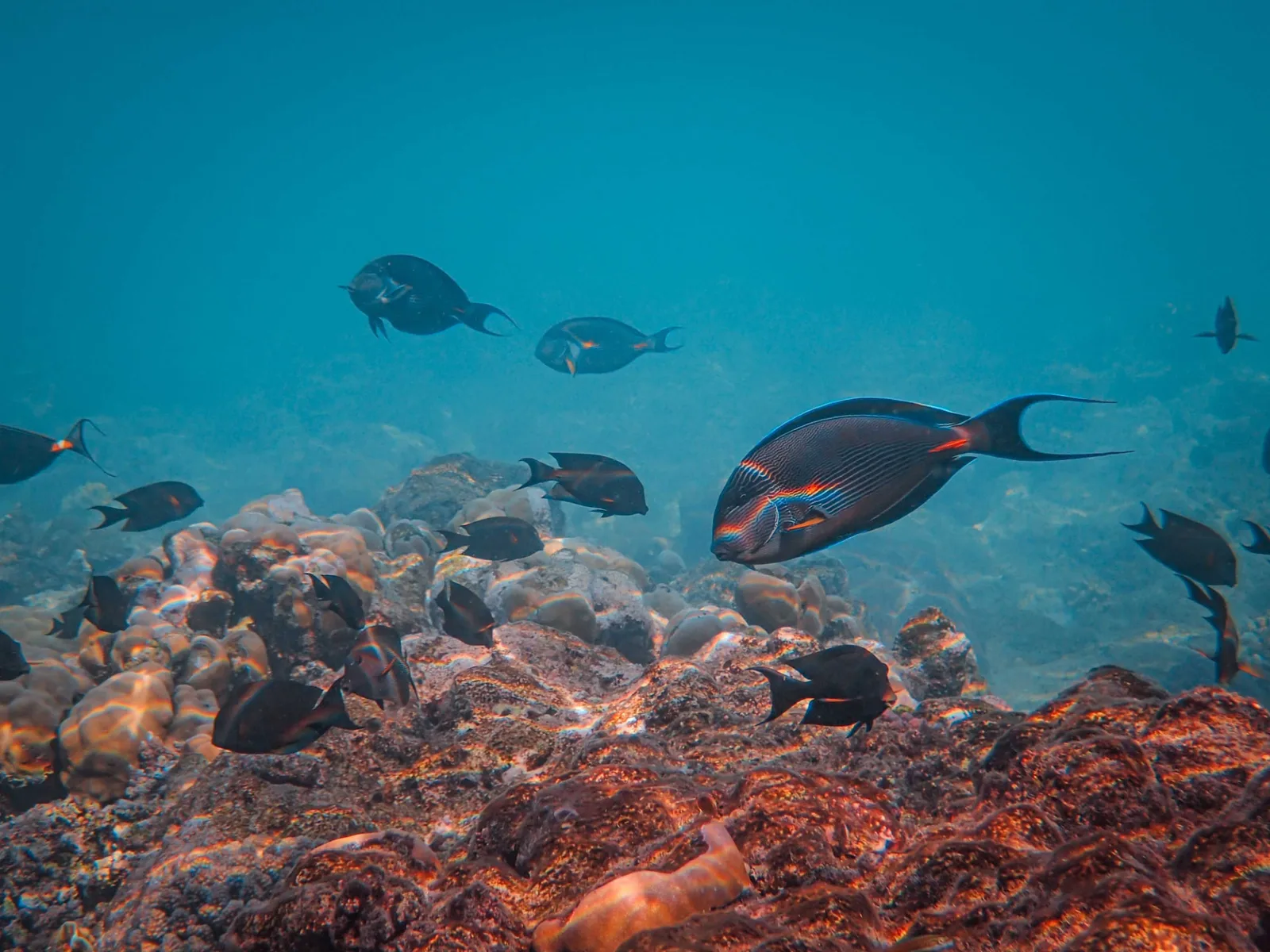
Schools of tropical fish
This is usually what you notice first.
A few meters below the surface, groups of small fish move between rocks and coral areas. Among the species or groups you might encounter are sergeant majors, parrotfish, and wrasses.
Parrotfish are particularly interesting to observe as they scrape rocky surfaces in search of food. Wrasses include many species with very different behaviors and colors.
However, you shouldn't expect to see the exact same fish every time. Sea conditions, location, depth, season, and simply animal behavior influence every excursion.
That is also what makes snorkeling in Boa Vista so charming: no two outings are ever identical.
Atlantic groupers
By looking carefully around rocks and crevices, it is also possible to encounter larger fish.
The Atlantic comb grouper (Cephalopholis taeniops) is among the fish found in the waters of Cape Verde, alongside other grouper species.
Unlike small fish that often move in schools, groupers are more associated with rocky structures and shelters.
During a snorkeling session, the best way to spot them is often to slow down. Instead of swimming quickly from one point to another, take a few seconds to inspect crevices, boulders, and shadowed areas.
That is often where the best surprises are hidden.
Moray eels hidden between rocks
The honeycomb moray eel (Muraena melanotis) is also among the species recorded in Cape Verde waters. Other moray eels can also be found around Boa Vista.
The moray eel spends much of its time in holes and rocky crevices. It is quite common to see only its head sticking out of a cavity.
Its appearance can be intimidating, but responsible observation simply means maintaining a safe distance and never trying to put your hands under rocks.
When snorkeling, observing without touching is always the golden rule.
Seabreams and other coastal fish
Different species of seabreams are also part of the marine fauna encountered in Cape Verde waters.
These silvery fish move around rocky areas and can easily be observed when visibility is good.
They are among those species visitors might overlook at the beginning of an excursion before gradually distinguishing the different shapes, colors, and behaviors of the fish surrounding them.
That is one of the joys of snorkeling: the more attentively you observe, the more the underwater landscape comes alive.
Sea urchins and starfish
Fish are not the only interesting inhabitants of Boa Vista's seabed.
By looking closely at the rocky sea floor, you can also spot sea urchins and starfish.
So take the time to look down at the bottom rather than focusing only straight ahead.
Sea urchins can hide in small crevices while some starfish blend perfectly with the colors of their environment.
These animals must obviously stay exactly where they are: observe them, but do not pick them up.
The corals of Boa Vista
One of the most fascinating elements of Boa Vista's seabed is not a fish.
Several coral genera are present in the shallow waters of Cape Verde, notably Porites and Siderastrea. Other coral organisms are also found in the archipelago's waters.
At Baía das Gatas, coral formations create a favorable habitat for various marine species. Depending on the tide, some of these formations can get very close to the surface.
These formations are fragile.
It is essential never to step on them, hold onto them, or make any unnecessary contact.
A single poorly controlled fin stroke can damage an environment that took many years to grow. Taking time to master your movements allows you to enjoy the view while respecting the seabed.
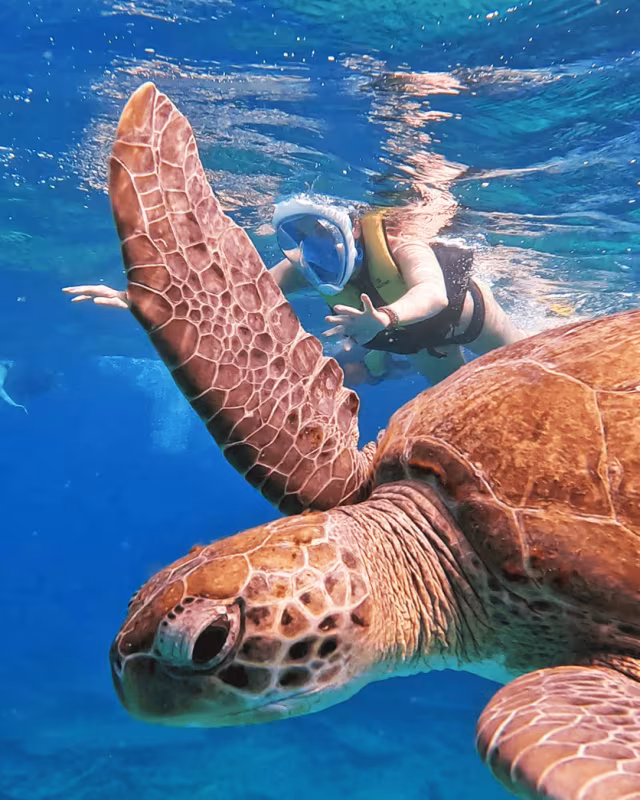
Can you see turtles while snorkeling in Boa Vista?
This is naturally one of the top questions travelers ask before an excursion.
Yes, encountering a sea turtle is possible, but it is never guaranteed.
Several species of sea turtles frequent Cape Verde waters, including the green turtle, leatherback turtle, olive ridley, hawksbill, and the famous loggerhead turtle (Caretta caretta).
Boa Vista holds special importance for loggerheads, as a large portion of Cape Verde's loggerhead nesting takes place on the island's beaches.
Cape Verdean waters also serve as feeding grounds for some green and hawksbill turtles.
During a snorkeling trip, a turtle may occasionally appear nearby.
If you are lucky enough to meet one, stay calm, keep your distance, and let it freely choose its path.
Never swim directly toward it or attempt to touch it.
The best encounter is one where the animal can continue its natural behavior without altering its path due to your presence.
What about rays?
Rays can also be spotted with a bit of luck on certain outings around Boa Vista.
They often glide close to the bottom and can be hard to distinguish when their color blends into the sand.
That is why it pays not to look only straight ahead: inspect the sandy patches between rocks as well.
A shadow or a slightly different shape on the seabed can sometimes reveal the presence of a ray.
As with all wildlife, sightings can never be promised. Nature decides.
Can you see small sharks in Boa Vista?
This is probably the encounter that sparks the most curiosity.
At Baía das Gatas, small nurse sharks can sometimes frequent certain areas, especially at specific times of the year.
This does not mean every trip will reveal one.
They are wild animals whose presence varies naturally.
If an encounter occurs, keep your distance, avoid moving closer intentionally, never touch the animal, do not block its path, and do not try to get a photo at all costs.
The goal is to have the privilege of observing an animal in its natural habitat, not to force an interaction.
Can you see barracudas?
Barracudas are also among the fish found in Cape Verde waters.
However, they tend to swim in open water, so their presence shouldn't be considered a routine or guaranteed sighting during a shallow snorkeling session.
An occasional encounter remains possible depending on the spot and conditions.
This is an important distinction regarding Boa Vista's biodiversity: a species present in the island's waters is not necessarily visible on every snorkeling trip.
It is precisely this element of surprise that makes every outing unique.
Where to go snorkeling in Boa Vista?
Several areas around the island allow you to explore Boa Vista's underwater world.
The Bay of Sal Rei
The Bay of Sal Rei features several relatively shallow areas that are great for snorkeling when conditions are favorable.
Around Djeu, the islet located opposite Sal Rei, different spots allow you to discover underwater life and observe the sea floor.
Its proximity to Sal Rei and Praia do Estoril makes this part of the coastline easily accessible by boat.
Baía das Gatas
Located on the northeast coast of Boa Vista, Baía das Gatas is famous for its coral formations and the marine life they harbor.
Conditions here are strongly tied to the tide. Water levels, swell, wind, and currents can significantly alter snorkeling possibilities.
This shows why a good spot shouldn't be chosen based solely on a map.
Time of day, tides, and actual sea conditions matter just as much as the location itself.
When is the best time to go snorkeling in Boa Vista?
There is no single day or season that guarantees flawless conditions.
Snorkeling depends primarily on real-time sea conditions.
Underwater visibility, swell, currents, wind, and tides can change from one day to the next.
Calm, clear water will generally offer a more enjoyable experience and make it easier to see fish and corals.
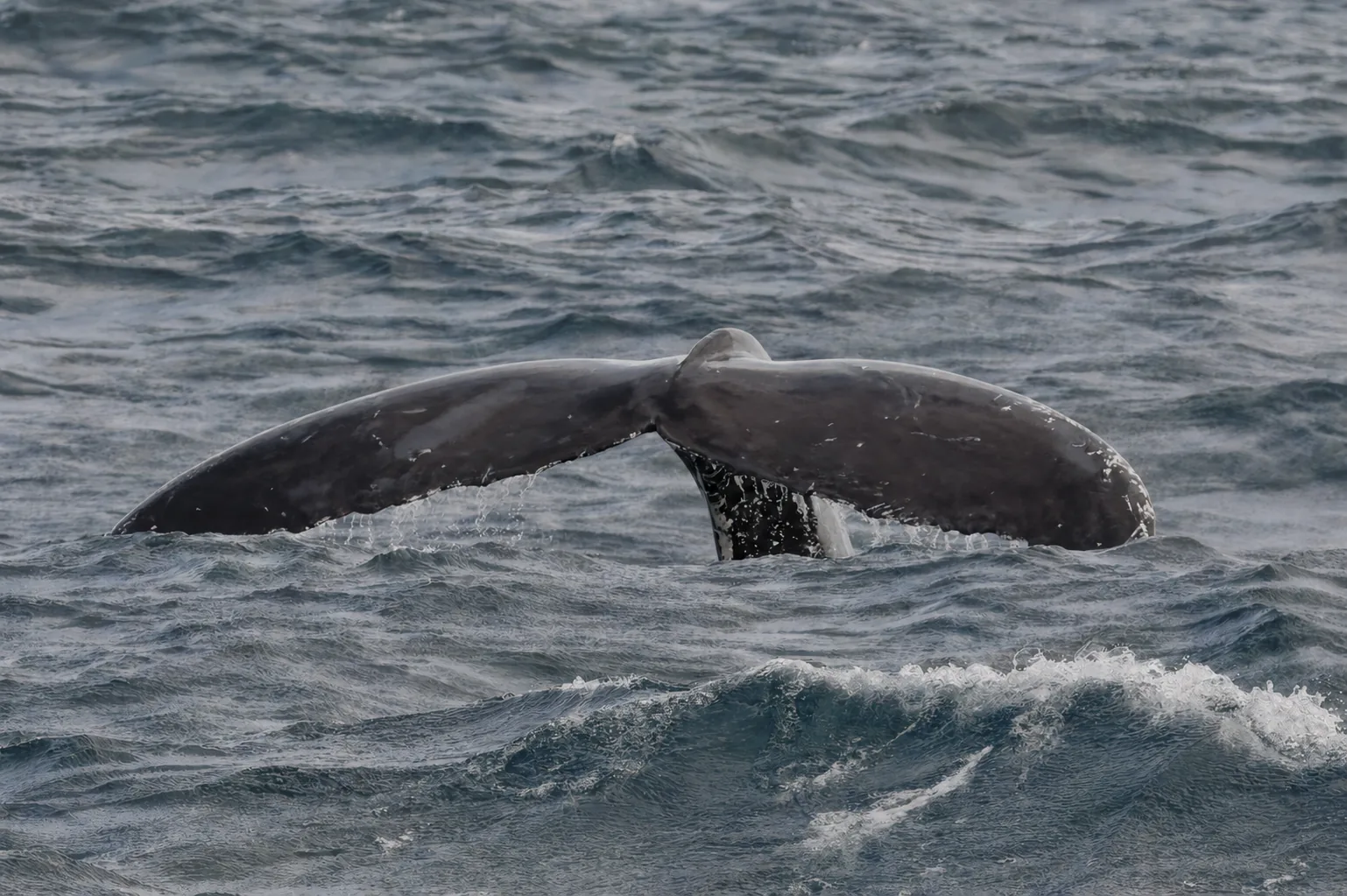
At Marina Travel Tours, snorkeling activities are currently not offered during the whale watching season from early February to late May.
To organize your trip, it is best to check availability matching your travel dates.
Why choose a guided snorkeling excursion?
The water might look perfectly calm from the beach, even while conditions are completely different a few dozen meters out.
Currents, rocks, waves, and depth can quickly alter a spot's conditions.
A guided excursion ensures spots are chosen based on the day's conditions, keeping you safely accompanied throughout the activity.
It is also a great opportunity to better understand what you are seeing.
A fish you might only glance at for a few seconds becomes far more interesting when you know its name, behavior, or where it likes to hide.
For a first glimpse into Boa Vista's underwater world, going with a guide lets you enjoy the experience more while enjoying maximum safety.
How to observe marine life without disturbing it?
Boa Vista's seabed is a fragile natural ecosystem.
Snorkeling lets you discover this biodiversity, but everyone can help protect it with a few simple actions:
never touch turtles, fish, or other animals do not feed marine life do not collect starfish, corals, or other organisms avoid stepping on coral formations never chase an animal to take a photo control your fins near the sea floor do not leave any trash in the water keep a reasonable distance from animals follow the guidelines provided by your captain or guide.
The best technique for observing underwater life is often the simplest: swim slowly, make minimal movements, and take time to look around.
The calmer you are, the higher your chances of noticing the tiny details that make marine life so fascinating.
Every snorkeling excursion in Boa Vista is unique
Your first outing might reveal numerous small fish and a moray eel tucked between rocks.
Another day might bring a turtle gliding past a few meters away.
You might spot a ray resting on a sandy bottom or discover fish you've never noticed before.
With a bit of luck and depending on the location and season, other encounters can happen too.
That is precisely what makes snorkeling in Boa Vista so captivating: it is not an aquarium.
Nothing is scheduled.
Nothing is guaranteed.
You step briefly into a natural environment where wild animals simply go about their lives.
And it is often this element of the unexpected that transforms a simple boat trip into a true travel memory.
Discover the marine life of Boa Vista with Marina Travel Tours
In Boa Vista, Marina Travel Tours offers guided snorkeling excursions designed to explore the island's underwater world under optimal conditions.
Sites are selected according to ocean conditions to ensure you make the most of the experience and explore diverse underwater habitats.
Fish, rock formations, marine life, and with a bit of luck, turtles or rays can highlight your trip.
Whether you are already comfortable with a mask and snorkel or simply curious to see what lies beneath the Atlantic, snorkeling offers a completely different way to explore Boa Vista.
Beyond its beaches, dunes, and desert landscapes, the island holds an underwater world well worth discovering.
Put on your mask, look below the surface, and discover another side of Boa Vista.