
When to see sea turtles in Boa Vista? Discover the nesting season, beaches, loggerhead turtles, and rules to observe them without disturbing them.
Sea Turtles in Boa Vista: When to See Them and How to Observe Them Without Disturbing Them?
Every year, as night falls on certain beaches of Boa Vista, an exceptional natural phenomenon takes place.
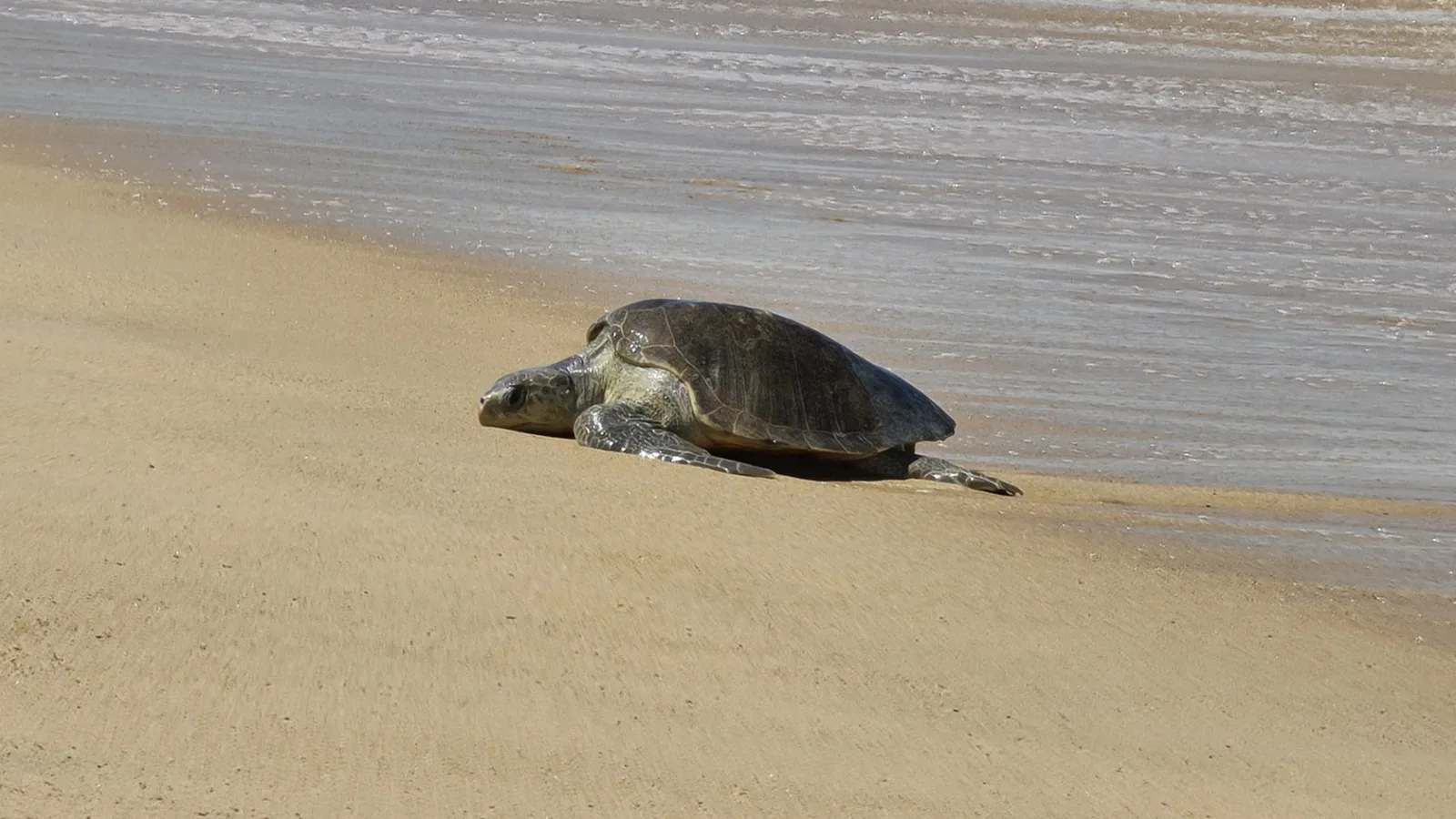
Loggerhead turtles (*Caretta caretta*) leave the ocean to reach the sand and lay their eggs.
Boa Vista holds a particularly important place for this species: according to the Turtle Foundation, about two-thirds of the nesting activity recorded in Cape Verde is concentrated on the island.
Watching a turtle lay eggs can be one of the most memorable moments of a trip to Cape Verde.
But this experience requires a great deal of respect.
Here is when to see turtles in Boa Vista, where they nest, and above all how to observe them without disrupting their reproduction.
Why Is Boa Vista So Important for Turtles?
Five species of sea turtles can be observed in the waters of the archipelago: green turtle, leatherback turtle, olive ridley turtle, hawksbill turtle, and loggerhead turtle. However, the loggerhead turtle is the only one that regularly nests in very large numbers in Cape Verde.
Boa Vista represents one of the main nesting areas.
This concentration gives the island a special responsibility in conserving the species.
The beaches are therefore not just beautiful tourist landscapes.
During the breeding season, they become a true natural nursery.
When to See Turtles in Boa Vista?
The nesting period mainly takes place from June to October. This window is confirmed both by conservation organizations and local tourism sources.
The exact dates naturally evolve from year to year.
The local tourism portal generally places the peak of nesting around August, but this indication should be considered a trend rather than a guarantee for any given night.
If turtle watching is one of the main motivations for your stay, July, August, and September are therefore at the heart of the most interesting period.
When Can You See Baby Turtles?
Nesting and hatching are two distinct events.
After incubation in the sand, the first hatchlings emerge towards the end of summer and continue through autumn. The Turtle Foundation indicates that hatchings can extend approximately from August through November, with strong variations depending on nesting dates.
Seeing baby turtles remains completely unpredictable.
You should never dig up a nest or try to force a hatching.
Where Do Turtles Lay Eggs in Boa Vista?
Several areas of the island are important for nesting.
The Tourism Institute of Cape Verde specifically cites areas like João Barrosa, while tourist resources in Boa Vista highlight Ervatão and more broadly the protected eastern coast.
The Turtle Natural Reserve covers a major part of the east coast and protects essential beaches for loggerhead reproduction.
This explains why certain accesses and activities are regulated.
A beach may seem empty and wild while hosting dozens of invisible nests underneath the sand.
How Does Nesting Take Place?
When a female arrives on the beach, she slowly leaves the water, searches for a suitable area, and then digs her nest in the sand.
Once egg-laying begins, the animal is in a particularly sensitive phase.
After depositing the eggs, she closes the nest and returns to the ocean.
This entire sequence can be compromised by inappropriate human behavior: excessive light, noise, getting too close, or vehicle traffic.
That is why responsible observation must follow strict rules.
Why Shouldn't You Use Flash?
White lights and flashes can disrupt turtles.
The Turtle Foundation specifically recommends avoiding white lamps and observing from a distance, following the guides' instructions. It also specifies that the approach must be done cautiously and never from directly in front of the animal.
Your phone can therefore stay in your pocket if conditions do not allow for respectful photography.
No photo is better than a disturbed turtle.
Why Should You Stay Behind the Turtle?
A female arriving on the beach may abandon her attempt if she encounters obstacles, people, or light sources in front of her.
Conservation guidelines therefore emphasize observing from a sufficient distance and, once conditions are met, from behind the animal.
Never block her path to or from the ocean.
Do not touch her.
Do not crowd around her to get a photo.
Is It Mandatory to Take a Guide?
For visitors, guided observation is the preferred option.
Nesting beaches are protected areas, and access rules and permits may evolve. Turtle Foundation reminds us that Boa Vista uses a system of organized tours and licenses on authorized beaches.
As this source highlights overcrowding challenges observed in 2024, it is important to check the exact rules and authorized operators at the time of your stay, rather than relying on an old online list.
Avoid setting off alone at night in search of turtles.
Can Tourism Disturb Turtles?
Yes.
Observation can raise awareness among visitors and generate local income, but excessive visitation can also become a threat.
The Turtle Foundation has documented disruptions linked to the number of visitors, lights, and vehicle traffic on nesting beaches.
Tourism pressure, coastal development, poaching, and plastic pollution are among the identified threats to Boa Vista's turtles.
Visitor behavior truly matters.
Can You See Turtles While Snorkeling?
Yes, an encounter is possible.
The waters of Cape Verde host several turtle species, and a turtle can sometimes be seen during a snorkeling excursion.
However, no encounter can ever be guaranteed.
If you see one underwater:
stay calm, do not chase it, and let it choose its direction.
A turtle swimming away is not inviting you to follow.
Why Are Protection Programs Important?
Protection is not just about monitoring tourists.
On Boa Vista, the teams from Turtle Foundation and its local partner work on beach patrols, hatcheries when necessary, data collection, and public awareness.
This data makes it possible to monitor nesting trends and better understand the population.
For example, over 9,500 nests were recorded in 2025 on the beaches monitored by the Turtle Foundation, with strong natural variations from one year to the next.
A single year's figure should never be interpreted alone as a long-term trend.
Related activities
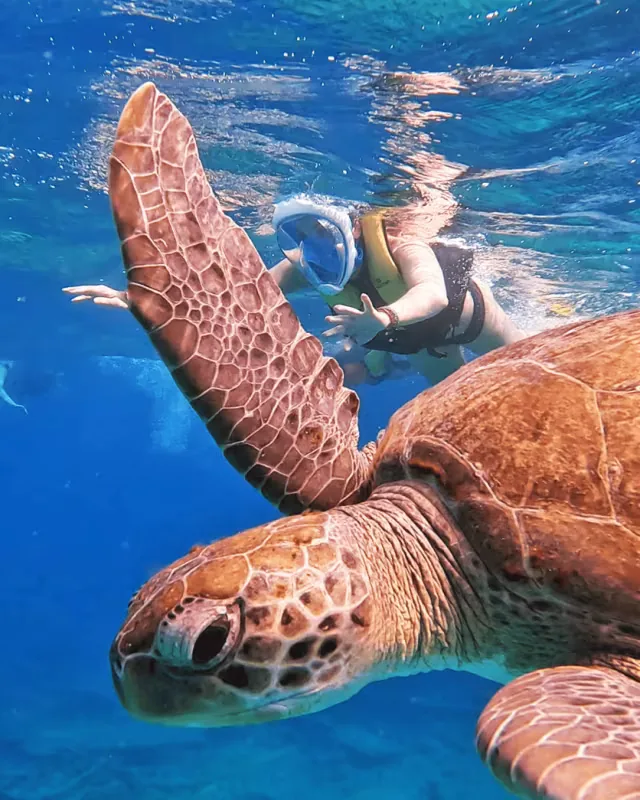
SNORKELING
Explore Boa Vista's crystal-clear seabed and watch spectacular underwater wildlife.
from 40€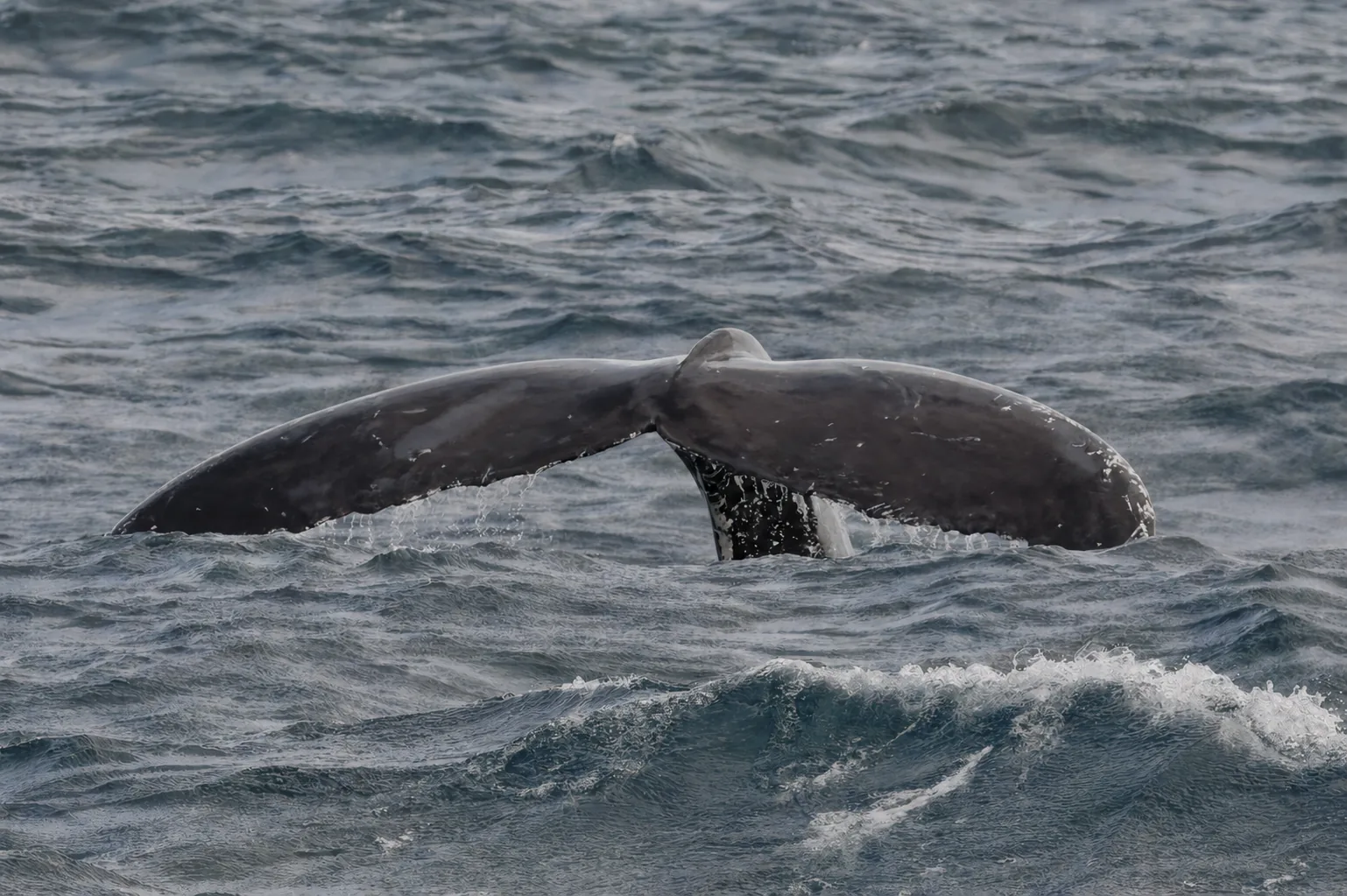
WHALE WATCHING
Live the unique emotion of watching humpback whales in their natural habitat off Boa Vista.
from 65€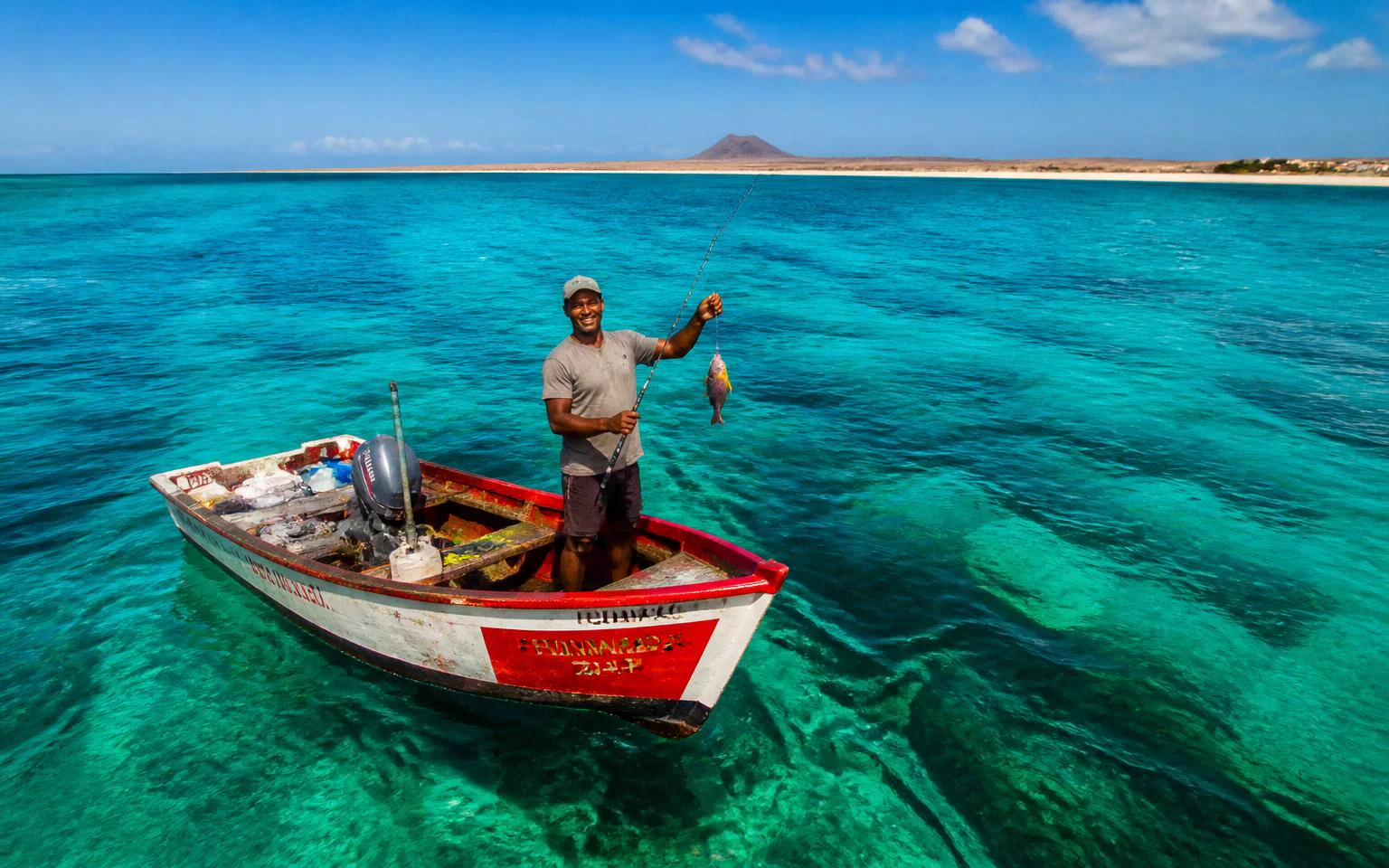
SEA FISHING
Enjoy an authentic fishing trip off Boa Vista, mixing technique, relaxation and sea scenery.
from 80€